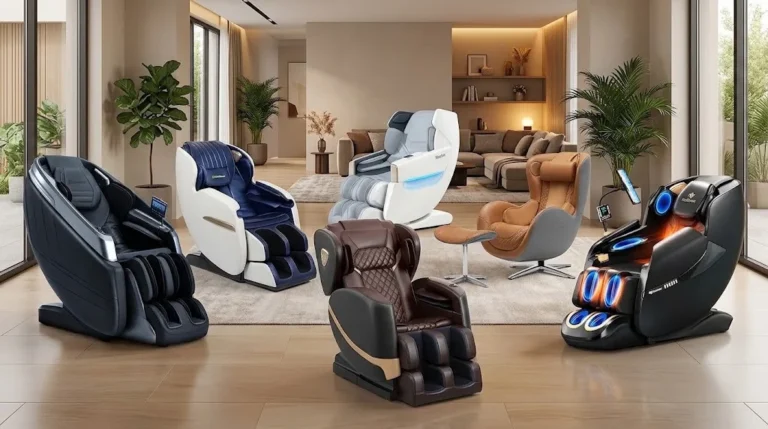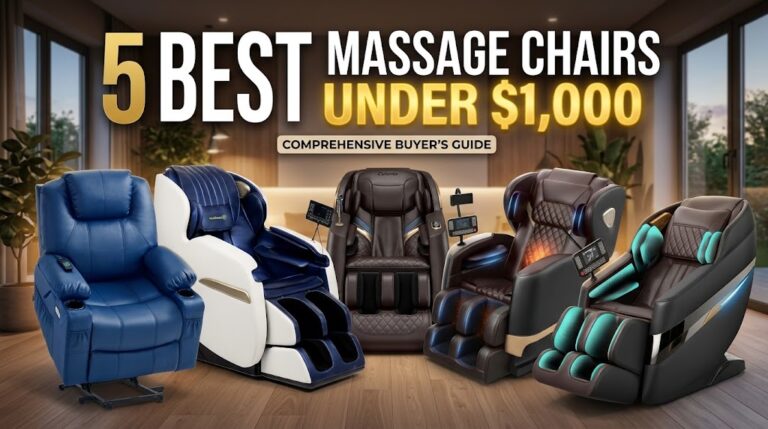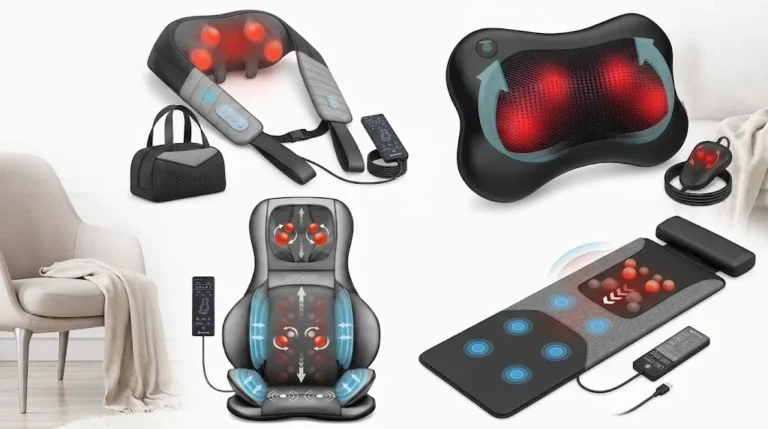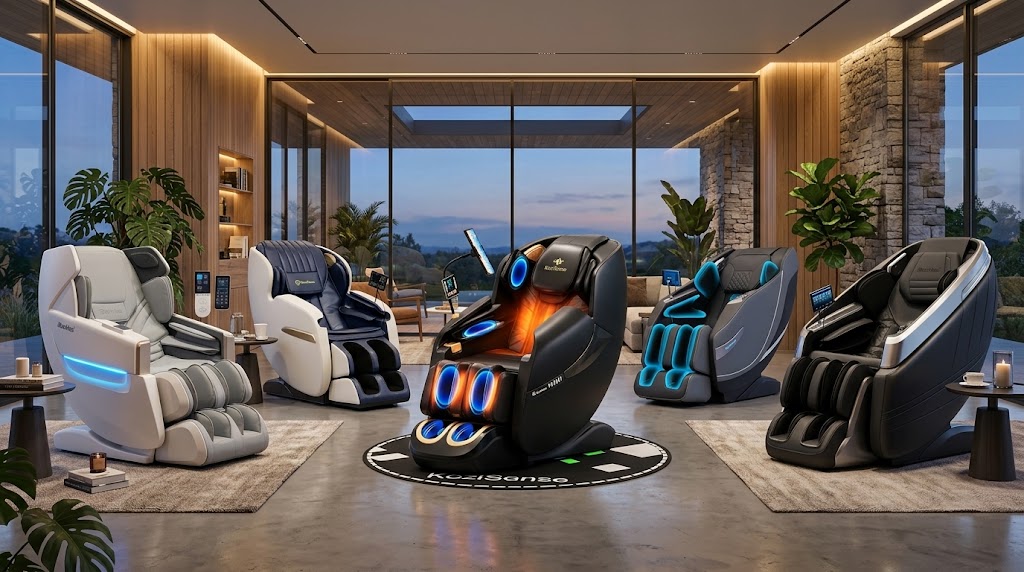
Are massage chairs good for you? For most people, yes, but not for every reason sales pages claim, and not for everyone. We checked 12 popular beliefs against clinical trials and medical case reports. First, five chairs that disprove the biggest myths:
5 Massage Chairs That Bust the Biggest Myths

Why it's #1: it arrives with no assembly, has replaceable modular parts and comes with U.S.-based support. It also earns the best owner rating in this list: 4.6 stars across 362 reviews.

Why it's #2: it can massage with airbags alone, no rollers, and lets you raise roller depth step by step. That makes "gentle" a setting, not a compromise. It trails KoziSense on rating and review count.


Are massage chairs good for you? For most healthy adults, used gently and in moderation, yes. A 2024 scoping review of 18 studies found massage chairs may help with stress, mental fatigue, muscle stiffness and pain. A controlled trial also found less neck and shoulder pain in office workers. The evidence is still small, and a chair didn't match physiotherapy in a back pain trial. Rare injuries have been reported in people with osteoporosis or polycystic kidney disease after vigorous sessions.
Last updated: October 2026 · Sources: PubMed-indexed trials and case reports, NIH's NCCIH and NIDDK; product data checked on Amazon US
Massage Chair Myths vs Facts at a Glance
| # | Myth | Verdict | The Fact in One Line |
|---|---|---|---|
| 1 | Massage chairs don't do anything | False | Small trials show real benefits for stress, stiffness and pain. |
| 2 | A chair can replace physical therapy | False | In a trial, physiotherapy beat the chair for pain and disability. |
| 3 | Massage chairs are dangerous | Mostly false | Risk appears low, but rare injuries occur in certain conditions. |
| 4 | The harder, the better | False | Reported injuries involved vigorous sessions; gentle works. |
| 5 | Longer sessions work better | False | Studies used 20–30 minute sessions, not marathons. |
| 6 | It's all just vibration | False | Real chairs use moving rollers; vibration recliners are different. |
| 7 | Good chairs cost a fortune | False | Well-reviewed SL-track chairs sell for under $1,000. |
| 8 | You need a huge room | False | Space-saving chairs recline 2–4 inches from the wall. |
| 9 | One size fits everyone | False | Height and weight ranges vary widely between models. |
| 10 | Never use one while pregnant | It depends | A labor trial found benefits; everyday use needs a doctor's OK. |
| 11 | Heat settings are always safe | False | Reduced feeling, as with diabetic nerve damage, changes the rules. |
| 12 | Never HSA/FSA eligible | Partly true | Not automatically, but possible with a doctor's letter. |
Myth 1: "Massage Chairs Don't Actually Do Anything"
Verdict: False, with a caveat. A 2024 rapid scoping review pulled together 18 studies on massage chairs. It concluded that they may positively affect both physical and mental health, with possible benefits for stress, mental fatigue, muscle stiffness, pain, thinking skills and quality of life. Notably, more of the studies showed mental-health benefits than physical ones.
The strongest single example is a 2023 randomized trial with 60 office workers. Adding a 20-minute massage chair neck program, twice a week for six weeks, to basic heat treatment reduced neck and shoulder pain and disability more than heat treatment alone. No adverse events were reported.
The caveat: these are small studies, many from a handful of research groups, and several test one manufacturer's chairs. Treat the benefits as promising, not proven.
What to do: Buy a chair for relaxation and everyday tension relief, not as a cure. Our neck and shoulder pain guide covers chairs built for the area that trial studied.
Myth 2: "A Massage Chair Can Replace Physical Therapy"
Verdict: False. A 2020 randomized trial compared a home massage chair with standard physiotherapy in 56 people with lower back pain. Both groups improved in pain, satisfaction and quality of life. But physiotherapy improved pain and disability significantly more. The chair cost about 60% as much, and the authors concluded it is "not a replacement for physiotherapy." Several authors worked at a massage chair company's R&D center, which makes that candid conclusion more telling.
What to do: Use a chair between therapy sessions to stay loose, not instead of them. If you have sciatica, see our sciatica guide, and follow your therapist's plan.
Myth 3: "Massage Chairs Are Dangerous"
Verdict: Mostly false, but not for everyone. The NIH's National Center for Complementary and Integrative Health says the risk of harm from massage appears low. It also notes rare serious side effects, such as blood clots, nerve injury or fractures. Some reported cases involved vigorous massage or higher-risk people such as older adults.
For chairs specifically, the medical literature contains a few case reports:
- An older woman developed a spinal compression fracture while using an automated massage chair. Tests then revealed osteoporosis she hadn't known about. The authors advise people with, or at risk of, osteoporosis to be cautious with deep massage chair programs.
- A 77-year-old man with polycystic kidney disease suffered a ruptured kidney cyst and internal bleeding after a vigorous massage chair session.
What to do: Talk to your doctor first if you have osteoporosis, kidney disease, a history of blood clots, a bleeding disorder, an implanted device, or recent surgery or injury. Our massage chairs for seniors guide includes a full health checklist.
Myth 4: "The Harder the Massage, the Better It Works"
Verdict: False. Notice a pattern in the case reports above: the kidney injury followed a "vigorous" session, and the fracture report warns about deep massage. NCCIH likewise links some rare serious events to vigorous deep tissue massage. Meanwhile, the benefits in trials came from ordinary, fixed programs, not maximum intensity.
What to do: Start on the lowest setting and raise it one step at a time over several sessions. Chairs with a gentle program or an airbag-only mode, like the iBooMas True 4D, make it easy to stay comfortable. If you're sore the next day, it was too strong.
Myth 5: "Longer Sessions Mean More Benefit"
Verdict: False. The trials showing benefits used modest doses. The neck and shoulder trial used 20 minutes, twice a week, and the labor pain trial used a single 30-minute session. Many chairs also end each program automatically after a set time, often 15 to 30 minutes.
What to do: Start with 10 to 15 minutes, and keep regular sessions to about 15 to 20 minutes once or twice a day. See our guide to how long to use a massage chair.
Myth 6: "Massage Chairs Are Just Fancy Vibration"
Verdict: False, for real massage chairs. Full massage chairs use motorized rollers. Some sit in fixed positions; better chairs move them along a track that follows your spine (2D), and 3D and 4D chairs also change how deeply they press. Airbags add squeezing compression for the arms, legs and feet. What does just vibrate is a typical power lift or massage recliner, which uses small vibration motors. It feels soothing, but it isn't kneading.
What to do: Check the listing for "rollers," "SL track," "3D" or "4D." Our explainers cover 2D vs 3D, 3D vs 4D and airbags vs rollers.
Myth 7: "A Good Massage Chair Costs a Fortune"
Verdict: False. Premium chairs can be expensive, but the budget tier has improved quickly. When we checked in October 2026, the Real Relax 2026 SL-Track was listed under $1,000. It has a moving SL-track massage, airbags, lower-back heat and 3,660 Amazon ratings. Well-reviewed fixed-roller chairs cost even less. Prices move often, though: one 3D chair we recommended at under $1,000 earlier this month has since risen above it.
What to do: Decide which massage type you need before comparing prices. Our best massage chairs under $1,000 guide explains what each budget tier actually buys.
Myth 8: "You Need a Huge Room for a Massage Chair"
Verdict: False. Traditional chairs swing backward when they recline, so they need a lot of clearance. Space-saving designs slide forward instead. The iBooMas 54" SL-Track says it needs only 1.97 inches from the wall, and other models we've reviewed list about 4 inches. Measure for the fully reclined length too, not just the upright footprint.
What to do: See our wall-hugger massage chair guide for compact options.
Myth 9: "Massage Chairs Fit Everyone the Same"
Verdict: False. Fit ranges vary more than most buyers expect. Among chairs we've reviewed this year, one fits users from about 4'9" to 5'9", another tops out at 240 lb, and the UIIU 3D is rated for 350 lb with a calf section extended to reach taller users' knees. A chair that's too long misses your shoulders. One that's too short digs into your neck.
What to do: Check both height and weight ranges before buying. See our guides for short people and tall people.
Myth 10: "You Can Never Use a Massage Chair While Pregnant"
Verdict: It depends. In a 2024 randomized trial of 208 first-time mothers in labor, 30 minutes in an electric massage chair modestly reduced labor pain, with no differences in delivery or newborn outcomes. That trial took place in a hospital, during labor, under medical supervision. It doesn't mean every chair setting is fine at any stage of pregnancy.
What to do: Ask your doctor or midwife first, especially early in pregnancy or with any complication. Use gentle settings and minimal heat. Our massage chair during pregnancy guide has the details.
Myth 11: "Massage Chair Heat Settings Are Always Safe"
Verdict: False for some people. Heat is one of the most-loved features, but it relies on you feeling when it's too much. The NIH's NIDDK explains that diabetic nerve damage can cause loss of feeling in the feet, so injuries may go unnoticed. The same applies to heat and pressure from a chair's foot and calf sections.
What to do: If you have reduced feeling, use the lowest heat setting, keep sessions short and check your skin afterward. See our foot massagers for neuropathy guide.
Myth 12: "Massage Chairs Are Never HSA or FSA Eligible"
Verdict: Partly true. Massage chairs aren't automatically eligible, and Amazon doesn't badge full chairs as FSA/HSA items. Under IRS rules, though, an expense can qualify when it's primarily to treat a diagnosed condition. With a doctor's Letter of Medical Necessity, some plans will reimburse a chair. Others exclude chairs entirely.
What to do: Check your plan before buying. Our HSA/FSA eligibility guide walks through the IRS rules step by step.
We searched PubMed for clinical trials, reviews and case reports involving massage chairs, and read the abstracts of every study cited here. We cross-checked safety guidance against NIH sources (NCCIH and NIDDK). Where a study tested one manufacturer's chair or had industry-affiliated authors, we say so. Product details come from Amazon listings checked in October 2026. This article is research-based and is not medical advice.
The Chairs That Prove These Myths Wrong
Each pick below disproves one of the myths above. All were in stock with strong owner ratings when we checked.
KoziSense A18 Zero Gravity Full Body Massage Chair with Heat, Body Scan, Voice Control

Worried a massage chair means a weekend of assembly and no help when something breaks? The A18 arrives with no assembly required. Its modular design lets individual parts be replaced, and KoziSense backs it with a 3-year limited warranty, lifetime virtual tech support and a U.S.-based service team. A steel 3D core with silicone rollers runs six techniques, a body scan sets the massage to each user, and voice control can be switched off. Owners rate it 4.6 stars and call it worth the money and easy to set up. It's rated for 250 lb.
- No assembly; modular, replaceable parts.
- 3-year limited warranty, lifetime virtual support.
- 3D core, body scan, heat for back, chest and calves.
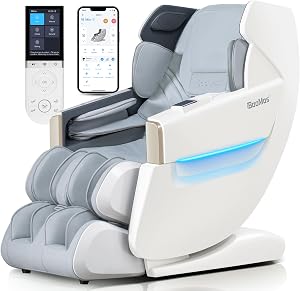
iBooMas True 4D Massage Chair with Airbag-Only Mode, AI Body Scan, Powered Leg Extension

This chair answers Myth 4 directly. Its independent airbag massage mode works with no rollers at all, with adjustable zones and intensity. iBooMas describes it as suited to beginners, seniors and anyone who prefers a softer massage. When you want more, the True 4D mechanism lets you raise roller depth and speed gradually. It needs no assembly, its powered leg rest adjusts automatically after the body scan, and it's rated for 330 lb.
- Roller-free airbag mode with adjustable intensity.
- Adjustable 4D depth and speed.
- No assembly, 330 lb rating, heat for back, lumbar area and feet.
Real Relax 2026 SL-Track Massage Chair, Zero Gravity, 8 Auto Modes, Voice Broadcast, Lower-Back Heat

With 3,660 Amazon ratings, this is one of the most proven chairs at the budget end. When we checked, it was listed under $1,000. Instead of fixed rollers, it uses a moving SL-track mechanism from the neck to the hips with three intensity levels and eight auto modes. Airbags work the shoulders, arms, calves and feet, and there's lower-back heat, foot rollers and a zero-gravity recline with a pause button. It announces each setting aloud, has a child lock, fits 5'1" to 6'1" up to 240 lb, and takes about 30 minutes to assemble.
- Moving SL track, 3 intensities, 8 auto modes.
- Airbags + lower-back heat, zero gravity with pause.
- 3,660 ratings; fits up to 240 lb.
iBooMas Massage Chair Full Body, 54" SL-Track, Space-Saving Design, Senior Gentle Mode, No Assembly

iBooMas says this chair needs only 1.97 inches from the wall to recline, and smooth-glide wheels make it easy to move. A 54-inch SL track follows the spine from the neck to the thighs. Manual mode offers six intensities, six techniques and three widths, and 18 programs include a "Senior Gentle" mode. It arrives with no assembly. One compact owner (5'4", 130 lb) found it less harsh than a chair they returned, but felt it may be small for anyone over about 200 lb.
- 1.97" wall clearance, glide wheels.
- 6 intensities, "Senior Gentle" program.
- No assembly, 3-year warranty, 30-day returns.
UIIU Massage Chair Full Body, 3D SL-Track, Calf and Knee Massage (+11 cm) for Tall People, 350 lb

UIIU raised the calf section by 11 cm so the massage reaches the knees of taller users, and rated the chair for 350 lb. 3D mechanical hands deliver shiatsu, kneading and tapping on a 135 cm SL track, guided by shoulder detection. It also offers a rocking sleep mode and a 3-year warranty. A 6'1", 245 lb owner says it fits well. Some owners find the rollers firm even on the lowest setting. Stock was limited when we checked.
- 350 lb rating; calf section reaches the knees.
- 3D rollers, 135 cm SL track, rocking mode.
- 3-year warranty.
Frequently Asked Questions
Are massage chairs good for you?
For most healthy adults, yes, when used gently and in moderation. A 2024 scoping review of 18 studies found possible benefits for stress, mental fatigue, muscle stiffness and pain, and a controlled trial found less neck and shoulder pain in office workers. The research is still limited, though, and a chair isn't a substitute for medical care or physical therapy.
Are massage chairs bad for you?
Not for most people. NIH's NCCIH says the risk of harm from massage appears low. Rare injuries have been reported, including a spinal fracture in a woman with undiagnosed osteoporosis and a ruptured kidney cyst in a man with polycystic kidney disease after a vigorous session. If you have a chronic condition, ask your doctor and keep the intensity low.
Can a massage chair cause back pain?
It can leave you sore if the pressure is too strong, the session is too long, or the chair doesn't fit your height, so rollers press in the wrong places. Start on the lowest setting for 10 to 15 minutes, choose a chair sized for your body, and stop if pain lingers into the next day. Sudden, severe back pain during a session needs medical attention.
Is it bad to fall asleep in a massage chair?
Dozing off on a gentle program is common and usually harmless, since most chairs end each program automatically after a set time. To stay safe, avoid sleeping with high intensity or high heat, especially if you have reduced feeling in your legs or feet. When you wake up, return the chair upright and stand up slowly to avoid dizziness.
Do massage chairs use a lot of electricity?
Usually not much, because they only run during short sessions. To estimate your cost, find the rated wattage on the chair's label or manual, multiply by the hours you use it each month, divide by 1,000 to get kilowatt-hours, and multiply by your electricity rate. Our massage chair power consumption guide walks through the math with examples.
How often should you use a massage chair?
Once or twice a day for about 15 to 20 minutes is plenty for most people. Start with 10 to 15 minutes on a low setting. Clinical trials that found benefits used modest schedules, such as 20 minutes twice a week for neck and shoulder pain, so more isn't necessarily better. Adjust based on how your body feels the next day.
The Bottom Line on Massage Chair Myths
True: massage chairs can ease stress, stiffness and everyday pain.
False: they replace physical therapy, harder is better, and longer is better.
Be careful if: you have osteoporosis, kidney disease, reduced feeling, a blood clot history or are pregnant.
Best all-round pick: KoziSense A18. Gentlest: iBooMas True 4D.
So, are massage chairs good for you? For most people they're a genuinely useful comfort tool, as long as you choose the right type and fit, start gently and keep sessions moderate. Talk to a doctor about any chronic condition. When you're ready to shop, our main guide to the best massage chairs compares every pick we recommend, and our power consumption guide covers running costs.
Affiliate Disclosure: ProBodyMassager.com may earn a commission from qualifying purchases made through links on this page, at no extra cost to you. It never changes which products we recommend.