Introduction
Choosing the right massage chair can feel overwhelming, especially when you start seeing technical terms that sound more complex than they really are. One of the most important comparisons to understand is air compression massage vs rollers, because these two systems are responsible for how a chair actually treats your muscles. Some chairs rely on gentle squeezing motions, while others use mechanical nodes to mimic the hands of a massage therapist. Knowing the difference helps you avoid buying a chair that is either too intense or too mild for your needs. This guide is designed for beginners, first-time buyers, and anyone curious about massage technology. Whether your goal is relaxation, pain relief, or daily recovery, understanding these core features will make your decision much easier.What Is Air Compression Massage?
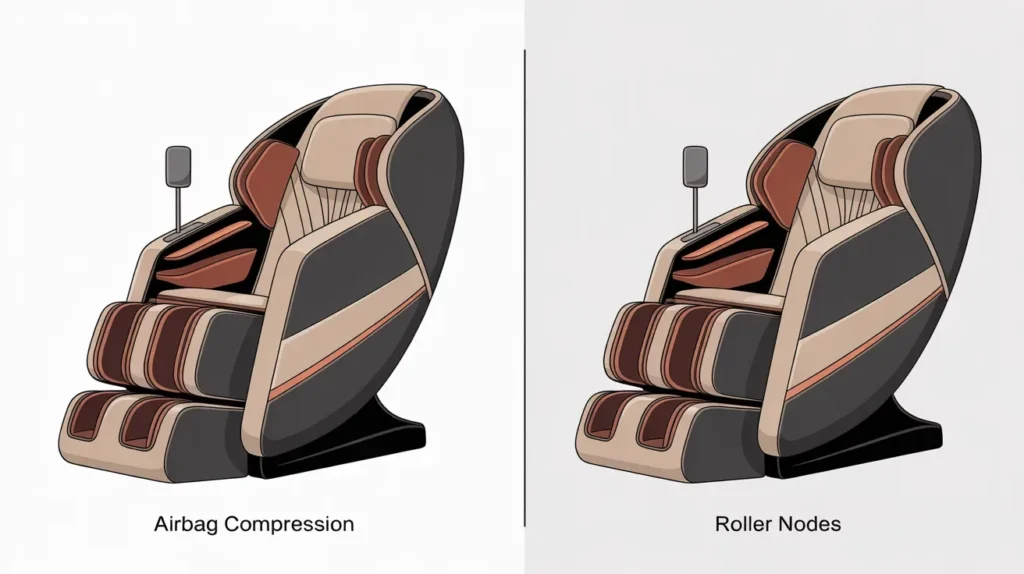
 Air compression is one of the most beginner-friendly massage technologies available today. Instead of digging into muscles, it works by rhythmically squeezing different parts of your body to stimulate blood flow and release tension. If you’ve ever used a blood pressure cuff, the sensation is somewhat similar but far more comfortable and relaxing.
How Air Cell Massage Technology Works
So, what is air cell massage exactly? Air cell massage uses strategically placed airbags inside the chair. These airbags inflate and deflate in carefully programmed patterns to apply pressure to your muscles. Here’s what happens during a session:- Airbags fill with air to create gentle compression.
- The pressure holds briefly to encourage circulation.
- The airbags release, allowing muscles to relax.
- The cycle repeats to create a soothing rhythm.
Key Benefits of Air Compression
- Improves circulation — The repeated squeezing encourages blood movement, reducing heavy, tired limbs.
- Reduces swelling — Ideal for those who sit or stand for long hours, minimizing fluid buildup.
- Supports gentle muscle recovery — Helps muscles relax without adding extra strain.
- Ideal for sensitive users — Provides relief without excessive pressure.
Potential Drawbacks
- Less deep tissue penetration — airbags compress rather than knead deep layers.
- May feel too mild for users who prefer strong, targeted tension relief.
What Are Massage Rollers?
 When comparing air compression massage vs rollers, rollers represent the more traditional and therapeutic side. Instead of squeezing, rollers apply focused pressure that closely resembles the hands of a massage therapist. They travel along your spine and sometimes extend to the neck and glutes, delivering targeted relief exactly where tension builds up.
How Roller Systems Operate
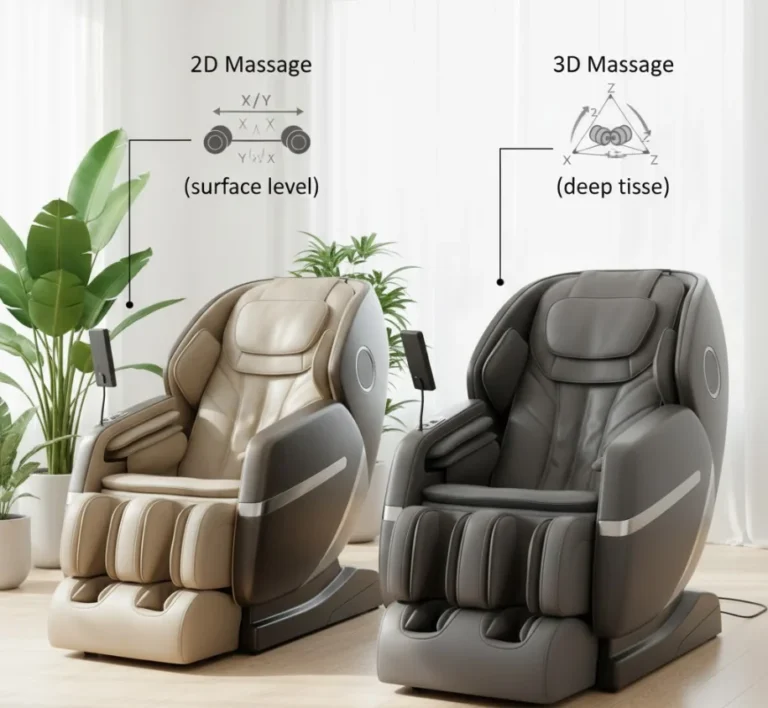
Roller systems use mechanical nodes that move up and down a track inside the chair. These nodes press into muscles, perform kneading motions, and adjust their depth based on the program you select.- 2D Rollers: Move up/down and side-to-side. Reliable for basic relaxation.
- 3D Rollers: Add adjustable depth, pushing further into muscles for stronger relief.
- 4D Rollers: Advanced experience varying speed, rhythm, and intensity for human-like massage.
Main Benefits of Roller Massage
- Deep tissue relief — reaches deeper muscle layers to break up tightness.
- Targets knots and tension — concentrated pressure in upper/lower back.
- Mimics human hands — kneading, tapping patterns feel close to real massage.
- Great for back discomfort — ideal for people who sit long hours.
Possible Downsides
- Can feel intense, especially for first-time users on higher settings.
- Not ideal for injury recovery if muscles are inflamed.
- Limited coverage compared to airbags (mainly back & core).
Air Compression Massage vs Rollers — Quick Comparison
| Feature | Air Compression | Rollers |
|---|---|---|
| Pressure Style | Rhythmic squeezing | Kneading & pressing |
| Intensity Level | Lighter, soothing | Stronger, deeper pressure |
| Coverage Area | Arms, legs, shoulders, hips, feet | Spine and back muscles |
| Customization | Adjustable pressure levels | Depth, speed, technique adjustments |
| Best Use Cases | Relaxation & circulation | Tension relief & muscle treatment |
Step-by-Step Guide — How to Choose Between Air Compression and Rollers

- Identify your primary goal — Relaxation? Air compression. Pain relief? Rollers. Athletic recovery? Both technologies combined.
- Consider pain sensitivity — Beginners adapt faster to air compression. Deep-tissue lovers prefer rollers.
- Evaluate body areas that need attention — Full-body comfort (legs, arms) → air compression; spinal care & back tension → rollers.
- Test intensity options — Look for adjustable pressure, speed, and depth (especially for rollers).
- Think long-term comfort — A hybrid chair offers versatility if your needs evolve.
When Air Compression Is the Better Choice
 Air compression excels for seniors, beginners, and circulation concerns. The rhythmic compression encourages blood flow, reduces heaviness, and is perfect for post-workout recovery without digging into sore muscles. If your ideal massage feels calming rather than intense, air compression is often the better match.
When Rollers Are the Better Option
 If chronic back tension, desk-job stiffness, or deep tissue preference defines your needs, rollers are superior. They travel along the spine, loosening tight muscles and breaking up knots. Athletes and active individuals also benefit from the deep pressure that speeds recovery and improves mobility.
Pro Tips for Getting the Most Out of Either Technology

- Start on lower intensity — let muscles adapt to avoid soreness.
- Combine heat if available — heat relaxes muscles, boosting airbag and roller effectiveness.
- Stay hydrated — massage stimulates circulation, water supports recovery.
- Maintain good posture during sessions — align spine properly.
- Use regularly but avoid overuse — short, frequent sessions yield better results.
Common Mistakes to Avoid
- Choosing based only on intensity — stronger isn’t always comfortable long-term.
- Ignoring adjustability — settings ensure the chair adapts to evolving preferences.
- Skipping height and weight limits — leads to poor performance.
- Not testing different modes — you may discover a preferred setting.
- Overlooking warranty — important for long-term investment protection.
Frequently Asked Questions (FAQs)
Is air compression massage safe for daily use?
Yes for most people, daily use is safe in moderation (15–20 min sessions). Air compression is gentle, focusing on rhythmic squeezing rather than deep pressure. Always consult a doctor if you have medical conditions like varicose veins or recent surgeries.
Are rollers better for back pain?
Rollers often win for back discomfort because they apply targeted pressure along the spine to loosen tight muscles, knots, and posture-related strain. Adjustable depth is essential to avoid aggravating sensitive areas.
Do premium chairs combine airbags and rollers?
Yes, high-end massage chairs intentionally merge both technologies. Rollers deliver deep tissue therapy while airbags provide full-body compression — ideal for households with different pressure preferences.
Which massage type is closer to a real massage therapist?
Rollers typically come closer thanks to kneading, tapping, and pressing motions that imitate professional techniques. However, air compression adds the sensation of being gently held and released for calming comfort.
Is air cell massage good for circulation?
Absolutely — rhythmic inflation/deflation encourages blood movement through limbs, reducing heavy tiredness. Air cell technology is excellent for overall flow and recovery.
Can beginners tolerate roller massage?
Yes, starting with lowest intensity allows muscles to adapt. Modern chairs offer adjustable depth, making rollers accessible even for newcomers who want noticeable muscle work.
Conclusion
 Understanding the difference between air compression massage vs rollers makes it much easier to choose a massage experience that truly supports your body. Air compression stands out for gentle, circulation-boosting comfort, while rollers excel at delivering deep, targeted muscle relief. Neither is universally better — the right choice depends on your goals, pressure tolerance, and lifestyle. If you want the best of both worlds, hybrid chairs offer a versatile solution that evolves with your needs. Choose the technology that feels good to your body, and you’ll build a routine that supports long-term comfort and wellness.